Explain It Like I'm 3: The Sad Chimp On The Cover
Can having more things make us less happy? A funny conversation about a sad chimpanzee explores consumerism, sustainable living, materialism, and finding joy in life's simple pleasures.


Can having more things make us less happy? A funny conversation about a sad chimpanzee explores consumerism, sustainable living, materialism, and finding joy in life's simple pleasures.
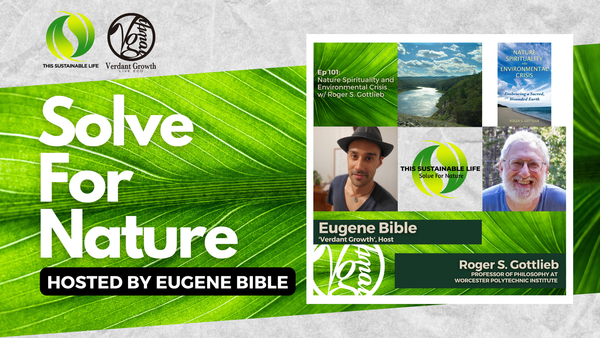
For Episode 101, Eugene Bible interviews Roger S. Gottlieb about nature spirituality, environmental challenges, and our connection to the natural world. Discover how finding meaning, practicing gratitude, and taking action can help us care for the Earth and build a deeper relationship with nature.
What makes a relationship truly meaningful? I used to think maintaining friendships was enough, until I realized I was better at keeping in touch than building deep connections. Here’s what I’m learning about active listening and cultivating relationships that make life more meaningful.
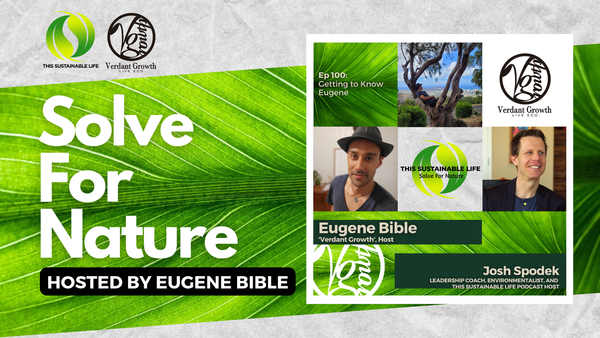
For Episode 100, Josh Spodek interviews Eugene Bible about sustainable living, personal growth, deep conversations, and finding meaning and purpose. Discover how connecting with nature and making intentional choices can lead to a happier, healthier, and more connected life.
You did what you were supposed to do. You went to school, built a career, and created a life you thought would make you happy. So why does something still feel missing? Maybe it's time to ask yourself if the life you're living is really the one you want.
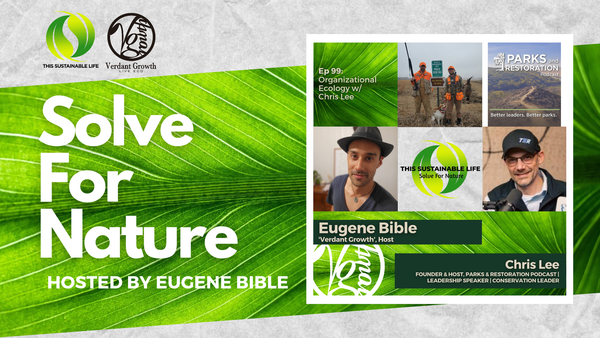
Chris Lee co-hosts the Parks and Restoration podcast and runs a county conservation department in Iowa, with 20 years in parks and natural resource management. His whole thing is 'leadership through the lens of ecology' — he's built a framework called Organizational Ecology that takes lessons
I thought I’d finally figured out my phone addiction. I cut social media down to almost nothing, added some friction, and stopped reaching for my phone so much. Then I started checking everything else instead. Turns out, getting rid of the app isn't the same as getting rid of the itch.
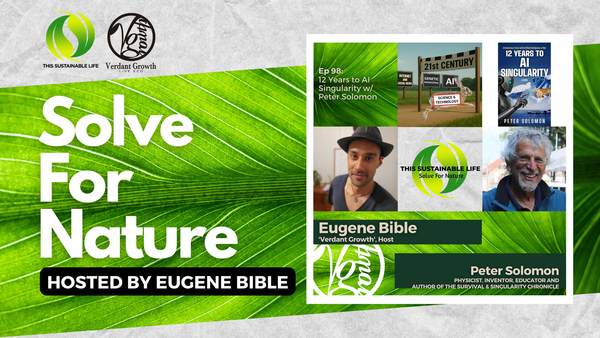
Peter Solomon is back — physicist, five-time entrepreneur, and author of the Survival & Singularity Chronicles, who's spent his career sounding the alarm on the technologies he believes could end us. His new novel, 12 Years to AI Singularity, imagines a near future where AI surpasses human control,

George Schaller may be the reason mountain gorillas, Bengal tigers, and giant pandas still exist in the wild. Considered the father of modern field biology, he trained Jane Goodall and Dian Fossey, worked in 32 countries, and sounded the alarm on the "great dying" of the natural world

Food companies spent decades engineering the perfect craving. Now another industry is making billions helping us silence it. GLP-1s may be changing how we eat—but are we treating the symptom while leaving the system untouched?

Have you ever looked at a chunk of time and decided, before it even started, that it was going to be wasted? That's where I was standing at a bus stop in Honolulu, watching the minutes tick down on my phone. Eight minutes until the bus. Eight minutes
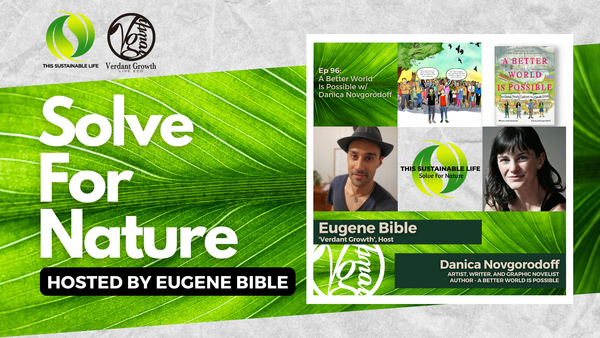
Danica Novgorodoff has spent her career turning complex ideas into visually stunning stories — and A Better World Is Possible may be her most personal yet. The New York Times bestselling illustrator and 2022 Yoto Kate Greenaway Medal recipient, whose work includes the graphic novel adaptation of Jason Reynolds' Long