We’re all Downstream Part 1: On Ripples, Responsibility, and Refusing To Look Away
We have never been more connected by technology, yet we feel increasingly disconnected from each other and the world around us. From smartphones and online shopping to plastic waste and modern convenience, are we ignoring the hidden costs of the things we call progress? We’re all downstream.

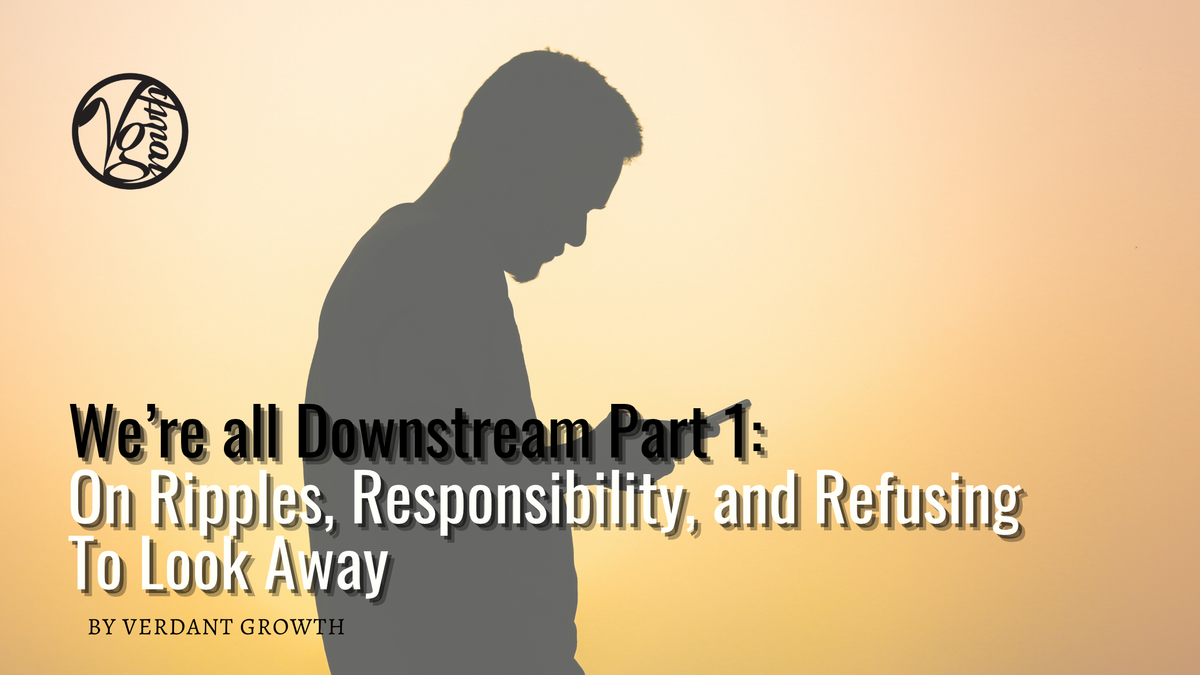
Do you ever feel like you're less connected to people than ever, despite all the technology around us that allows us to “connect” with others? Smart phones, instant messaging, various messengers that can send text, voice, or video in an instant…and yet somehow I can still feel alone. There are apps now to have anything delivered to your door in an instant without having to talk to a cashier or ask a store employee where something is. You don't even have to go to a bar and talk to multiple people before asking for a phone number anymore. Just swipe until you find the “right” person and then message them directly.
Social lives through a phone, people preferring text over phone, deliveries instead of cashiers, not knowing the names of your neighbors, kids raised by a family of four instead of a community…We've become so disconnected from other people that it feels isolated. Part of me feels like “I'm just living my own life and don't have time for a social life” but another just feels like “Isn't life SUPPOSED to be social?” What is life without real human connections?
It's so easy to be so focused on myself that I forget about others. Both in the direct sense - forgetting to be intentional about making time regularly for friends and family, and in the indirect sense - that my trash pollutes other people's land, or my car's exhaust contributes to other people's bad air.
If you lived even 70 or 80 years ago, you were probably connected to a lot of people and the connection felt real: in-person social events were everywhere. Finding a mate meant going out to where lots of people were. Neighbors were support systems for everything from running out of eggs to watching the kids playing in the street.
All the convenience we have now masks or erases completely the connections to other people.
A few examples
Your smartphone
This is the obvious one. That thing that dominates your life and takes over every free second of your time for the profit of major tech companies has direct effects that are designed to give you dopamine hits that keep you scrolling and not being social and has now been shown to have very damaging effects on relationships and prevents young people from developing social skills needed to form real connections with people. The science has connected screen time to decreased happiness and health. It also effects people in less visible ways: it's built from minerals mined by people you'll never meet (cobalt in Congo is the usual example).
So it's taking away your health, happiness, and connection, while harming the environment and other people. Great.
Recyclables
This is one I bring up because recycling is still to this day touted as the environmentally friendly thing to do. But the fact is US plastic recycling rate was 8.7% in 2018 and fell to 5-6% by 2021, largely because countries like China and Turkey stopped accepting US waste exports. That means most of those single use Coke bottles and PET plastic containers that you food come in that you wash and put in the recycling bin to do something “good” for the environment are actually just going in with the trash 95% of the time. And often, that means getting dumped on land of third world countries. The science has also shown that all the plastic packaging we have leach chemicals into our food that affect our health, likely in detrimental ways. The recycling bin lets you feel like you did your part without ever seeing where it goes.
Again…Convenience that feels like it's making our lives easier, but is likely slowly poisoning us and others.
The Amazon box on your porch
Have you noticed everywhere you go now, cashiers are becoming a thing of the past? Self-checkouts, Amazon drivers that bring things directly to your door, and Uber eats…We’re eliminating more human connection from the way we get things in our lives. Often, we're also getting them shipped in from far away places instead of getting what's available to us locally. More miles means more trucks, more highly polluting container ships, and worse air and water for it. Not to mention that the workers that remain (Amazon drivers, Uber drivers, etc.) are often underpaid and forced to work under stressful conditions to maximize efficiency and profit. The ease of shopping now often results in over-buying - we buy things on a whim, without any thought of whether we actually need the things or not. The dopamine hit that comes from hitting the “Buy Now” button can be just as addictive as social media.
The Solution
…will be covered next time. This blog post is getting way too long. Let's wrap it here with this: I didn't consciously choose most of this. I got a phone, then a pile of apps, then a habit of having things show up at my door, and I called it normal because everyone around me was doing the same. I don't have all the answers yet, but I know where I'm starting. More on that in Part 2.